
The takeaway
Fambot shows where agent products may gain adoption next: not by replacing a single app, but by coordinating the fragmented systems people already use.
Why it matters for builders
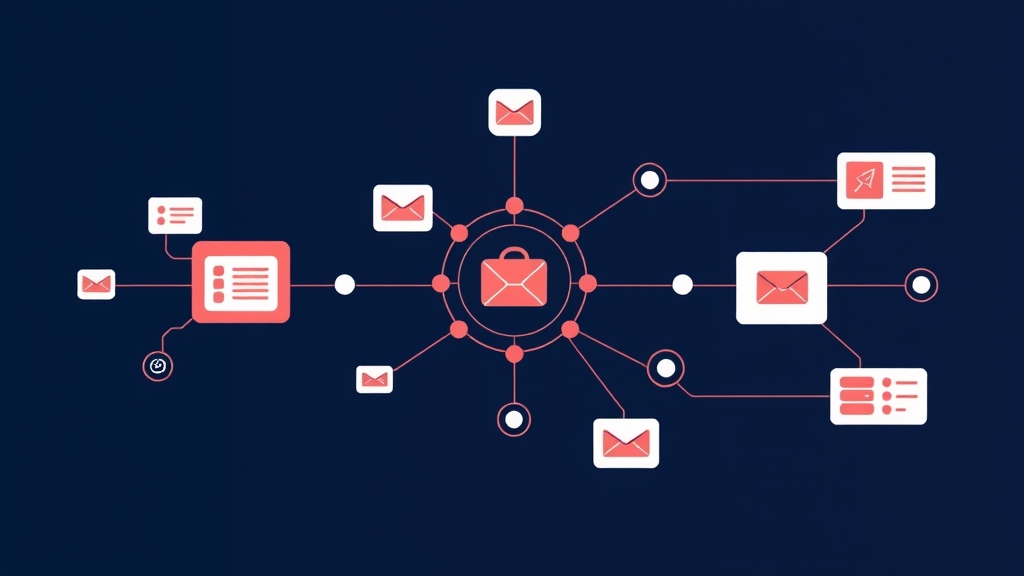
Fambot shows why useful agents are becoming coordination layers across email, calendars, and messaging, with permissions and traceability as core product features.
Fambot Brings AI Agents Into the Family Operations Stack
The newest AI agent pitch is not another chatbot. Fambot wants to become the coordination layer for family life by turning scattered messages and schedules into a proactive daily workflow.
From inbox overload to a daily operating layer
Fambot, founded by former Instagram engineer Greg Karlin, David Reich, and Jason Morrow, connects a family’s email, calendar, and selected WhatsApp groups. It then produces a daily checklist and a forward-looking view of upcoming commitments. The product is designed around the administrative work that usually falls between apps: finding the important detail in a school message, remembering the deadline, and turning it into an action.
TechCrunch reports that the startup tested the product with more than 1,000 families before launch. Fambot is currently free in beta across iOS, Android, and the web, with a future price expected to be around the cost of a Netflix subscription. The company has raised $3.5 million in pre-seed funding.
Why the agent lives across channels
The important product decision is that Fambot is not limited to a messaging interface. Families can still text the service, but the company is also building a web and mobile experience for richer workflows. That gives it room to combine conversational requests with structured lists, calendar views, and recurring responsibilities.
This is a useful pattern for builders. An agent becomes more valuable when it can observe a process across the systems where work already happens, then return a decision-ready summary or next action. The hard part is not merely model selection. It is permissioning, reliable extraction, deduplication, and a clear boundary between a recommendation and an action.
The approach echoes the broader lesson in n8n Lab’s analysis of data boundaries for local AI agents: context is only useful when it remains governed and connected to the right operational layer.
Builder impact
Fambot’s launch points to a practical design direction for AI automation: build around a coordination surface, not an isolated model endpoint. For an automation team, that means starting with the user’s fragmented inputs, defining a canonical task model, and making every proposed action traceable to its source message or event.
It also raises the bar for privacy. A family assistant touches calendars, private conversations, and children’s activities, so data minimization and explicit account-level permissions are product requirements, not add-ons. Fambot says its models cannot train on user data, but the larger test will be whether users can understand what is read, retained, and turned into a recommendation.
The opportunity is clear: AI agents can reduce coordination overhead when they operate across the tools people already depend on. The execution challenge is making that cross-channel intelligence predictable enough to trust.
The Automation Brief
Read 5 AI stories instead of 50.
The essential moves in AI agents, models, automation and infrastructure — filtered for builders and operators, with the part that actually matters.
No noise. Unsubscribe anytime.
Editorial notes
Stefan Trbojevic
n8n Lab Editorial
1 September 2026
1 September 2026
AI disclosure: AI assisted with research and drafting. Factual claims are reviewed by an editor.
