

The takeaway
When accelerators become a menu, the durable asset migrates up the stack: the serving layer, the router and the tool-calling surface become the real lock-in, and per-workload benchmarking replaces the single-vendor GPU decision.
Why it matters for builders
Multi-accelerator clouds mean architecture decisions split per workload: training, prefill and decode each get their own benchmark. Portability cost between accelerator families becomes a procurement question, and the orchestration layer - model routing, fallback, evals, cost ceilings - becomes the asset a team actually owns.
Oracle Opens Its Cloud to Google TPUs and Rival AI Silicon
For a decade the hyperscaler playbook was simple: build your own silicon, keep it inside your own walls, sell the capacity. On Tuesday at Oracle AI World in Las Vegas, Oracle broke that pattern. Oracle Cloud Infrastructure will offer Google's Tensor Processing Units to its customers - the first time Google's custom accelerators are sold on a hyperscale cloud platform outside Google itself.
The same announcement added OpenAI's Jalapeño chip, Cerebras inference hardware and, according to Reuters, Intel-backed SambaNova to the OCI menu, while Oracle expanded its existing Nvidia deal with Vera Rubin NVL72 superclusters and Vera CPUs. It is a tacit admission that no accelerator family fits every workload, and that the cloud's real product is the choice between them.
What Oracle Actually Announced
The headline is the Google deal. According to Oracle's announcement, OCI will "provide the power, cooling, and datacenter networking to deploy Google TPUs at scale within its infrastructure," with availability in calendar year 2027 and a multi-year ramp.
The technical detail matters more than the deal mechanics. Google's eighth-generation TPU family now ships as two purpose-built architectures: TPU 8t for training, which Google says delivers nearly three times the compute performance per pod over the previous generation and "cuts frontier model development cycles from months to weeks"; and TPU 8i for inference, built "to handle the iterative work of many specialized agents."
That split is the tell. Google is no longer selling one general-purpose tensor chip; it is selling a training machine and an agent-serving machine, and it needs distribution beyond its own cloud to justify the volume. Amin Vahdat, Google's SVP and chief technologist for AI and Infrastructure, framed it as breadth: "The next generation of AI will require a diverse range of compute."
Mahesh Thiagarajan, president of OCI, was careful not to frame any of this as an Nvidia exit. Asked directly by CNBC whether the diversification marks a pivot away from Nvidia GPUs, he said no - Nvidia chips are "the best, most fungible" - while admitting the driver is scarcity. "Now customers can actually have infinite possibilities in terms of how they can drive AI," he said.
The software side was equally large. Oracle and OpenAI announced four jointly built offerings: Oracle AI Workspace, which exposes Fusion Applications, NetSuite, Oracle AI Database and OCI through plugins inside ChatGPT; Oracle AI Security Mesh, a managed service running OpenAI's cyber models against customer systems across OCI, other clouds and on-premises; Oracle App Composer, which lets employees build applications with Codex while Oracle handles deployment on OCI Kubernetes Engine and the Autonomous AI Database; and an AI SMB Bundle starting free with $12,000 in annual Oracle cloud credits.
Why a Silicon Menu Changes the Math
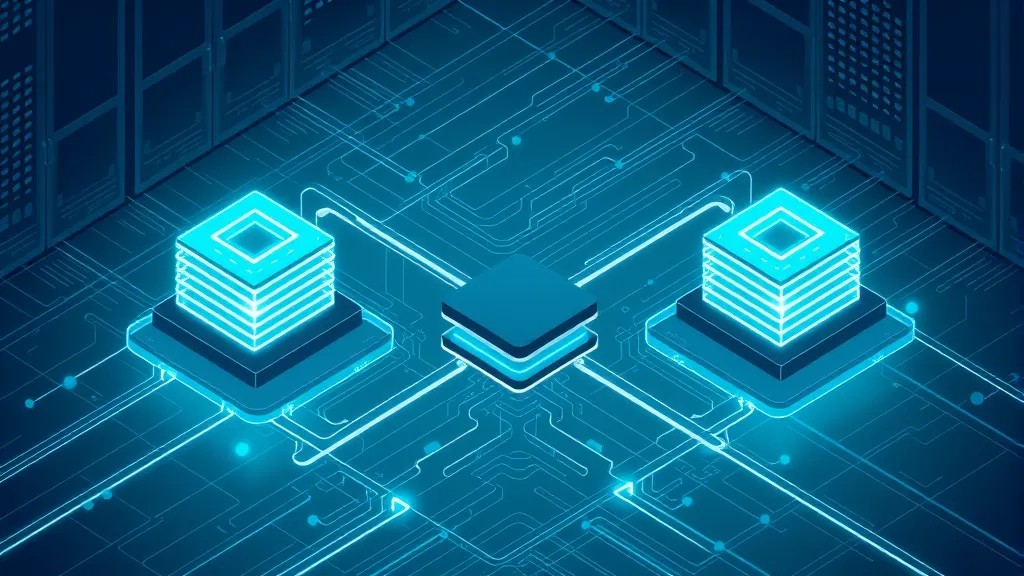
Every hyperscaler has spent three years designing custom silicon to escape Nvidia's margin and supply constraints. AWS has Trainium and Inferentia, Microsoft has Maia, Meta has MTIA, Google has TPUs. The unspoken rule was that each design stayed home. Oracle just turned its cloud into the one place where those designs compete on the same bill, next to the accelerator most of them were built to replace.
That is a different business model: instead of winning on proprietary silicon, Oracle bets on being the neutral venue - the cloud that rents you whichever chip wins your benchmark.
There is a financing logic too. Oracle's stock is down more than 30% this year on concerns about funding a multi-gigawatt data center pipeline - the same capital-markets anxiety that dominated the last few weeks of AI news. Renting out floor space and power to other people's silicon monetises capex without having to win the accelerator race yourself. Thiagarajan said the disputed New Mexico "Project Jupiter" site is one of 30 to 40 data center projects the company develops each quarter.
Cerebras shows how much of this is about inference rather than training. Its wafer-scale hardware targets fast, interactive response, and its stock rose about 8% on the news - even though, per CNBC, it would not disclose the deal's scale because it is in a quiet period. SambaNova, which Reuters describes as Intel-backed, is also an inference play. AWS announced a Cerebras deal seven months ago; Oracle arrives late but with a wider menu.

The Lock-In Moves Up the Stack
If accelerators become interchangeable, the interesting question is what stops being interchangeable. The answer is everything above the chip: the serving stack, the compiler, the memory model, the way you shard a mixture-of-experts model across a pod, the way you route agent traffic.
Google's TPU story is not a chip story, it is a co-design story - "custom accelerators co-designed with open software," in Oracle's wording. Nvidia's moat is CUDA and two decades of kernels written against it. Cerebras' moat is a compiler that maps models onto a wafer. Putting all of them in one cloud does not make them portable; it makes the differences visible and billable.
For a builder, a decision once made once - "we are an Nvidia shop" - becomes per-workload routing. Training a dense model and decoding long agent traces have wildly different arithmetic intensity; Google is selling two chips for those two jobs. A cloud offering both plus an inference specialist invites teams to split workloads across architectures and treat the orchestration layer as the thing they own.
Oracle's software announcements point the same way. APEXlang, in App Composer, is pitched as generative development speed "without producing opaque application code that is difficult to maintain" - an argument about who owns the artifact an agent produces. AI Workspace's plugins are an argument about where the tool-calling surface lives. Security Mesh is an argument about who runs the offensive agents. None of those are chip decisions.
Builder Impact
- Benchmark per workload, not per vendor. The conversation is splitting into training, prefill-heavy inference and decode-heavy agent serving. Teams with one mental model of "GPU hours" will misprice all three.
- Portability is a procurement question. Ask what migration between accelerator families costs on the same cloud: container images, kernel forks, quantisation format, framework versions.
- The orchestration layer is the asset. If silicon is a menu, what you own is the router - model selection, fallback, eval harness, cost ceilings. That is the same argument that made agent evaluation frameworks yesterday's story.
- Watch the tool-calling surface. Fusion, NetSuite and Oracle's database behind ChatGPT plugins preview how enterprise agents will reach systems of record: vendor-blessed plugin contracts, not custom integrations.
- Expect the availability gap. TPUs on OCI arrive in calendar 2027 and ramp over years. Anything architected today needs a working fallback for several quarters.
What to Watch
Whether TPUs on OCI carry Nvidia-like pricing and commitment terms or arrive with volume minimums. Whether Microsoft and AWS reciprocate with competitor silicon - if they do, the neutral-venue thesis is validated; if not, Oracle has bought a distribution deal. And whether Oracle's investor day answers the funding question that took 30% off the stock, because none of this matters if the capex cannot be financed.
The AI stack is fragmenting into a marketplace at every layer. Models are chosen per task, agents are routed per step, accelerators are picked per workload. The companies that win the next two years will not have the best single component - they will make swapping components cheap.
The Automation Brief
Read 5 AI stories instead of 50.
The essential moves in AI agents, models, automation and infrastructure — filtered for builders and operators, with the part that actually matters.
No noise. Unsubscribe anytime.
Editorial notes
Stefan Trbojevic
n8n Lab Editorial
27 October 2026
27 October 2026
Sources
AI disclosure: AI assisted with research and drafting. Factual claims are reviewed by an editor.